
Cultural primer
Who is Zhong Kui?
Zhong Kui is the formidable demon queller of Chinese tradition: a bearded scholar, armed guardian, and protective figure whose image has changed across centuries of storytelling and art.
钟馗 · 鍾馗Mandarin pronunciation: Zhōng Kuí— first tone, then second tone
In brief
- Known for
- Quelling demons and guarding against harmful forces.
- Recognised by
- A beard, scholar’s cap, official robes, sword, and demon retinue.
- Found across
- Folklore, religious practice, painting, print, theatre, and festivals.
- Game connection
- Game Science names Zhong Kui as its primary inspiration; that does not establish the game’s plot.
Why the name matters
Zhong Kui and Black Myth
Game Science identifies Zhong Kui as the primary cultural inspiration for the second Black Myth title. Understanding the traditional figure gives players a better vocabulary for reading the game—but it is not a shortcut to an unannounced plot.
Officially confirmed
The project is the second Black Myth title and a single-player action RPG inspired primarily by the renowned Chinese folk figure.
Useful cultural context
Zhong Kui’s scholar identity, sword, demon-quelling authority, protective role, and changing visual traditions are relevant points of reference when reading official material.
Still unconfirmed
The final plot, the exact relationship between the game’s character and older legends, and which traditional stories the game may adapt.
The famous examination story
One widely repeated legend presents Zhong Kui as an exceptionally gifted scholar who succeeds in the imperial examinations but is denied the honor he earned because an emperor or court official rejects his appearance. In despair or protest, he dies. After receiving an honorable burial, he vows to protect the realm by subduing harmful spirits.
Versions disagree on important details: who rejected him, how he died, and which ruler later encountered him. These differences matter. They tell us that Zhong Kui is a figure shaped by repeated retelling, not a character with one modern-style canonical dossier.
The Tang emperor’s dream
Another influential account centers on Emperor Xuanzong of the Tang dynasty. While ill, the emperor dreams of a powerful figure defeating or consuming troublesome demons. After waking restored, he orders the image to be painted and circulated.
Museum descriptions connect the demon-quelling tale to the Tang period, but surviving retellings and images belong to a much longer history. The dream story helps explain why Zhong Kui’s portrait became protective: an image of him could do more than illustrate a tale; it could stand guard.
Scholar, judge, guardian, comic antihero
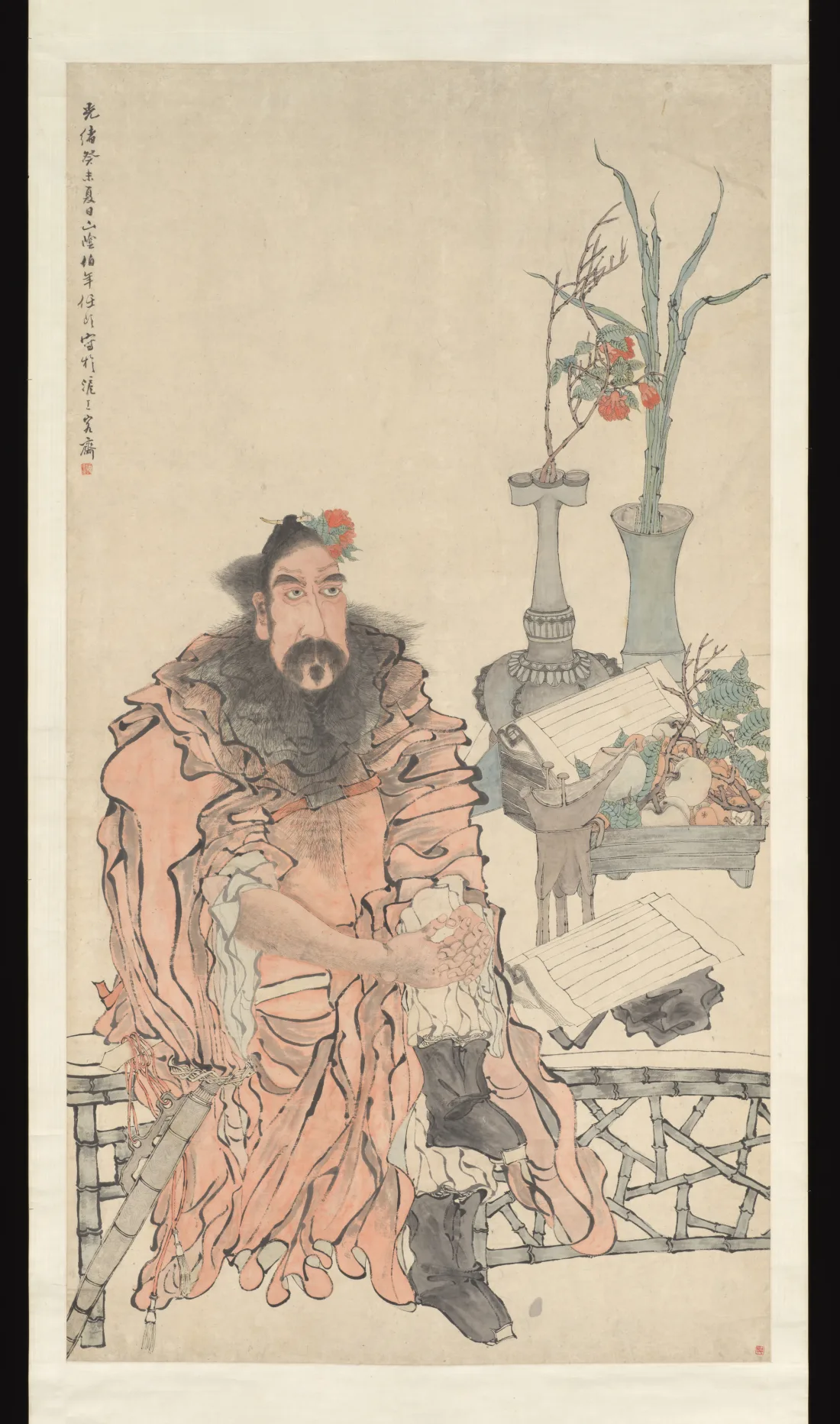
Zhong Kui’s intimidating face is only one part of the figure. His scholar’s dress recalls learning, examination, and official rank. His sword and demonic retinue make him an enforcer. In household and festival settings, his image can be auspicious—a defense against illness, malign influences, or bad fortune.
Artists also make him humorous, eccentric, drunk, weary, elegant, or tender. A Yuan-dynasty handscroll at The Metropolitan Museum of Art shows him leading his sister’s wedding procession while demons form an unruly escort. A nineteenth-century painting by Ren Yi depicts him less as a raging warrior than as an unusual scholar seated among cultured objects.
These works are a warning against flattening Zhong Kui into a generic “Chinese demon hunter.” His authority can be martial, literary, moral, ritual, political, or comic depending on the image.
His stories also moved between formats: told as the Tang emperor’s dream, staged in opera (the comic Zhong Kui Marries Off His Sister tradition), printed in New Year woodblock cycles, and absorbed into later fiction and gatekeeping customs. Reading one format alone gives a skewed picture; the guides built on the game’s official footage cite the same principle from the other direction.
Why portraits were displayed
Zhong Kui imagery has appeared in New Year customs and around the fifth day of the fifth lunar month, often associated with protection. Paintings and prints could be hung in homes as auspicious, demon-repelling images. Performers portraying Zhong Kui and his companions also appeared in processional traditions.
The figure traveled beyond China. In Japan he is known as Shōki, where images of the demon queller became associated with children’s health and the Boys’ Day festival. This does not make every Chinese and Japanese version interchangeable; it shows how a powerful motif can be adapted within different visual and ritual settings.
Further reading
- Game Science’s official Black Myth: Zhong Kui website
- The Metropolitan Museum of Art: Demon queller Zhong Kui with demons
- The Metropolitan Museum of Art: Zhong Kui by Ren Yi
- The Metropolitan Museum of Art: The Demon Queller Zhong Kui Giving His Sister Away in Marriage
- The British Museum: Zhong Kui collection term
For the game itself, the source-led guides continue from here: what the gameplay trailer’s combat actually shows, how the story footage relates to the folklore, and a close reading of Zhong Kui’s symbols, weapons, and companions.