
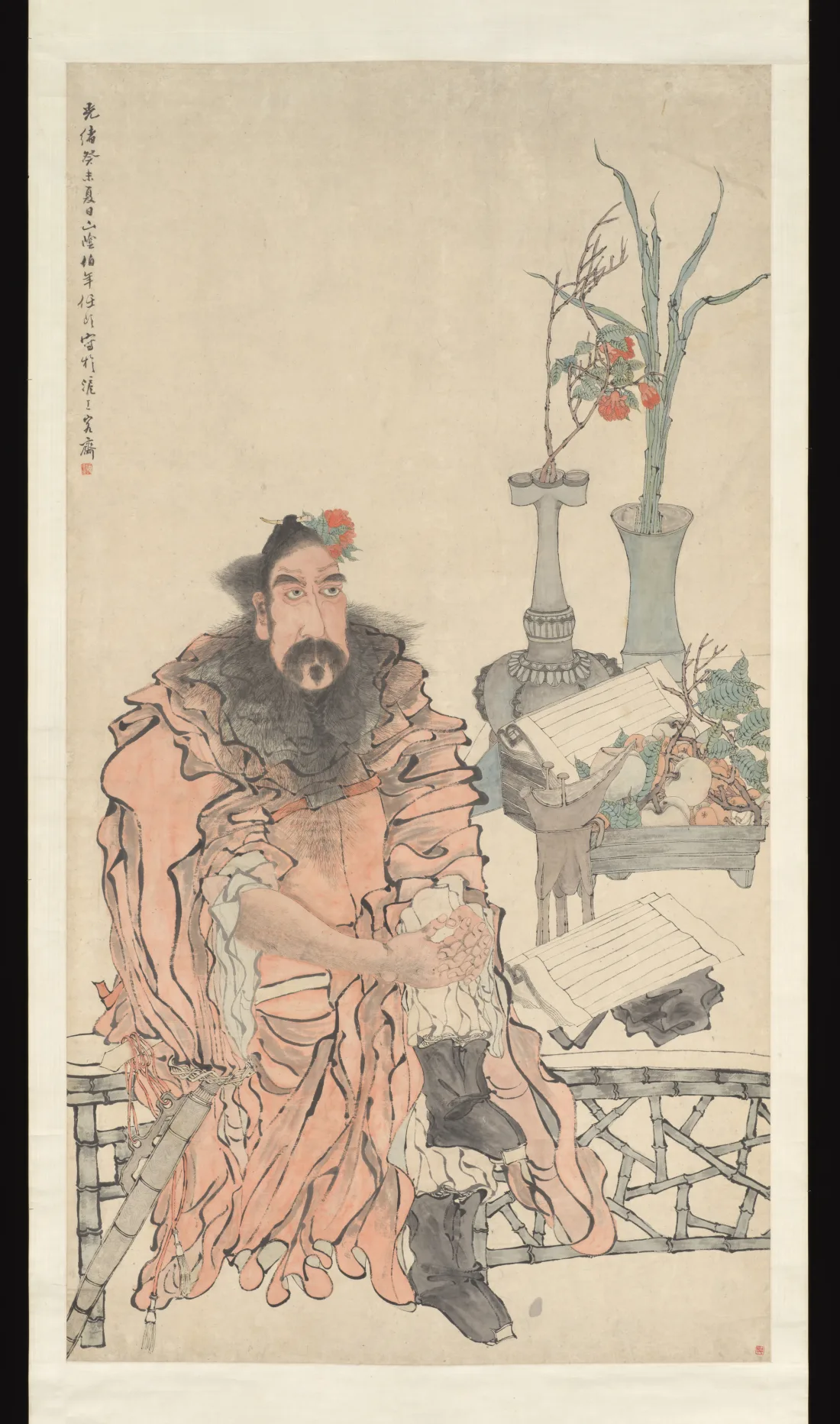
Why Zhong Kui’s appearance changes
Zhong Kui is not a modern fictional character with one fixed design sheet. He has been retold in folklore, ritual practice, painting, print, theatre, festivals, and popular culture for centuries.
Across those traditions he may look like a stern official, an eccentric scholar, a sword-bearing guardian, a comic antihero, or the commander of a demon retinue. The details vary, but several visual ideas recur often enough to help viewers read new Zhong Kui imagery.
They are cultural reference points—not a leaked guide to the game’s systems or plot.
Scholar’s cap and official robes
Zhong Kui is frequently presented as an educated man or official. His cap and robes connect to stories in which he is a gifted scholar whose examination success does not lead to the honour he expected.
That background creates a lasting tension in his image: rough or frightening appearance on one side, learning and moral authority on the other. Artists can make him wild-haired and comic without removing the scholar beneath the surface.
Game boundary: Official art may use caps, robes, or official-looking costume elements, but no released source provides a complete costume glossary. A familiar shape can suggest a tradition without proving a character identity or game ability.
The sword
Museum collections include many images of Zhong Kui carrying or wearing a sword. The weapon fits his role as a vanquisher of harmful spirits and makes his protective authority immediately legible in a still image.
The Met’s Zhong Kui Carrying a Sword is one direct example of that visual tradition. Other works show the sword as part of a larger official or guardian costume rather than the only focus.
Game boundary: The official gameplay trailer visibly includes sword combat, and the project’s promotional language invokes raising a sword. It does not yet confirm that the shown weapon is a named magical sword, Zhong Kui’s personal weapon, or the only weapon class available.
The trailer adds a combat detail worth reading next to this tradition: the swordsmanship visibly includes timed blade contact and deflection-like responses. Deflecting a strike with the flat or edge of a blade sits naturally beside the sword-carrying guardian image, and the trailer shows it repeated often enough to look deliberate.
Game boundary: The visible action still has no official mechanic name. For the full distinction between what the footage shows and what is named, use the gameplay and combat guide.
The tiger
Game Science’s official concept art shows a bearded figure riding a tiger. The image is one of the project’s clearest visual signatures so far, but the gallery does not explain the figure’s role.
The National Museum of Asian Art also catalogues an eighteenth-century Japanese work titled Zhong Kui (Shoki) on a tiger. That establishes a historical visual precedent for the pairing; it does not establish one universal symbolic meaning or explain the game image.
Still unknown: Game Science has not said whether the tiger is a mount, combat companion, named character, symbolic image, cinematic device, or playable traversal system. Calling it Zhong Kui’s fixed canonical companion would be premature.
Demons as attendants, not only enemies
Zhong Kui is famous for quelling demons, but demons around him are not always depicted as enemies. In paintings and prints they may carry objects, escort him, perform tasks, or form a strange retinue under his command.
The Met’s Demon Queller Zhong Kui with Demons is useful because it shows the group relationship rather than a simple hero-versus-monster scene. This visual tradition helps explain why a small demon beside Zhong Kui may be a servant or follower instead of an opponent.
Game boundary: Cultural precedent does not confirm recruitable demons, a spirit roster, party management, or a summon system. The gameplay footage contains allied-looking action, but the official material has not named the underlying mechanic.
Zhong Kui’s sister and the wedding procession
One important group of images depicts Zhong Kui giving his sister away in marriage, accompanied by an escort of demons. The procession can be ceremonial and comic as well as supernatural.
The Met’s Zhong Kui Giving His Sister Away in Marriage records this visual tradition. It shows that Zhong Kui stories can include family obligation and social ritual, not only combat.
Game boundary: No released official material confirms Zhong Kui’s sister as a character or the wedding procession as a quest, flashback, or plot source.
Protective portraits
Zhong Kui’s image could function as protection. British Museum material describes images associated with warding off harmful forces around seasonal observances, including the New Year and the fifth lunar month.
That helps explain why a Zhong Kui portrait is more than an illustration of a monster hunter. Displaying the figure can itself carry protective meaning.
Game boundary: A protective cultural role does not establish a shield ability, ward system, status effect, or defensive class in Black Myth: Zhong Kui.
What can the official game art safely tell us?
It can establish what Game Science has chosen to publish: a bearded tiger-rider, spirits and creatures, weapons, robes, landscapes, and a range of ink-inspired visual references.
It cannot yet establish:
- a named companion system;
- recruitable spirits or demons;
- tiger traversal;
- a sister character;
- magical sword mechanics;
- named combat mechanics behind the visible deflection actions;
- the exact meaning of every costume element;
- which concept-art relationships appear in the final game.
The safest method is to compare each official image with cultural sources while keeping the labels separate: published game image, museum-supported context, and unconfirmed game meaning.
For the wider traditional figure, read Who is Zhong Kui?. For the released game narrative, use the Black Myth: Zhong Kui story guide.
Sources
- Game Science — official Black Myth: Zhong Kui gallery and project page
- Black Myth — official 15-minute gameplay trailer
- The Metropolitan Museum of Art — Zhong Kui by Ren Yi
- The Metropolitan Museum of Art — Zhong Kui Carrying a Sword
- The Metropolitan Museum of Art — Demon Queller Zhong Kui with Demons
- The Metropolitan Museum of Art — Zhong Kui Giving His Sister Away in Marriage
- The British Museum — Zhong Kui collection term
- The British Museum — Demon-Queller Zhong Kui print
- National Museum of Asian Art — Zhong Kui (Shoki) on a tiger collection label
This guide will be revised if Game Science names a weapon, companion, mount, or symbol in official game material.